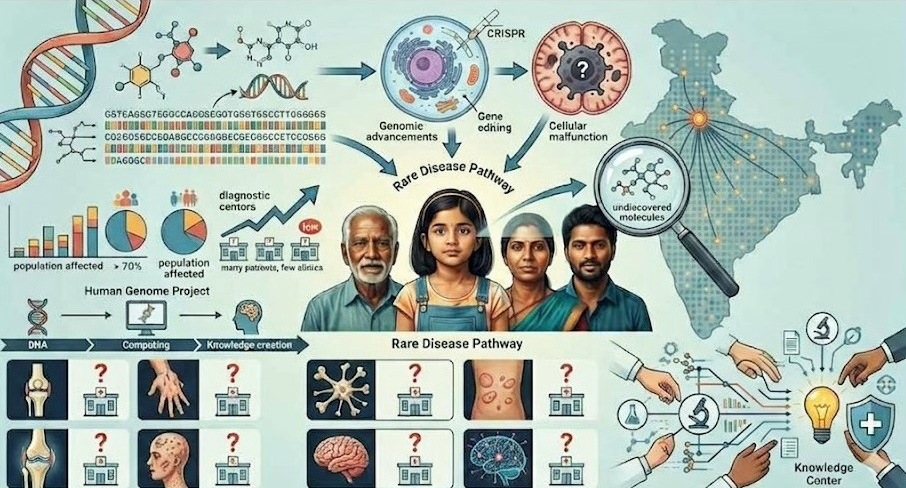
Rare diseases, once considered medical curiosities, are now being increasingly recognised due to remarkable advancements in genomics, molecular biology, and diagnostic technologies. The completion of the Human Genome Project and subsequent research have revolutionised our understanding of human diseases. Despite this progress, the underlying genetic or phenotypic basis for many rare conditions remains poorly understood. Globally, rare diseases affect a small percentage of the population individually, but collectively, they constitute a significant public health challenge.
In India, the magnitude of this problem is enormous. It is estimated that nearly 70 million people in the country suffer from one or another form of rare disease. Yet, the number of institutions equipped to diagnose, manage, or conduct research on these conditions is alarmingly low. As per current recognition, only 63 diseases are officially categorised as rare diseases in India, broadly divided into three categories based on their diagnostic and therapeutic availability. However, only a handful of diagnostic or treatment centres exist, and almost all are confined to government-run institutions. This limited capacity leaves a vast majority of patients undiagnosed, untreated, and often mismanaged.
Parallel to this, there exists a large group of chronic diseases—such as diabetes, hypertension, autoimmune disorders, chronic kidney disease, and neurodegenerative conditions—that, while not classified as rare, demand continuous medical supervision, periodic investigations, and multidisciplinary management. Patients suffering from such long-term illnesses often face difficulties in accessing comprehensive care under one roof. The absence of coordinated management frameworks and the need for repeated hospital visits lead to treatment fatigue, increased healthcare expenditure, and compromised quality of life.
Thus, there exists a significant gap in the healthcare ecosystem—both in terms of specialised diagnostic infrastructure and in providing integrated, affordable, and sustained care for patients with chronic and rare diseases.